Oregon PIP Does Not Follow Your Motorcycle: The Medical-Bill Gap That Blindsides Riders
If you ride in Oregon, you have probably heard that this state requires Personal Injury Protection, the no-fault coverage that pays your medical bills after a crash no matter who was at fault. For drivers of cars and trucks, that is true. For motorcyclists, it usually is not. This is the single biggest surprise Portland riders run into after a wreck, and it tends to show up at the worst possible moment: in a hospital bed on the east side, staring at a bill nobody is paying.
What PIP Is, and Why Cars Have It
Oregon built PIP to keep small crashes moving without a fault fight over the first round of bills. When two cars bump on I-5 or I-84, each driver's own PIP pays an initial layer of medical costs and a portion of lost wages quickly, regardless of who caused it. Oregon law sets that minimum medical benefit at $15,000, and it kicks in automatically because every private passenger auto policy in the state has to include it. That is the deal at the center of the system: fast payment on the front end so a fender bender does not turn into a lawsuit.
The catch is that the whole structure was written around four-wheeled vehicles. When you register and insure a motorcycle in Oregon, the PIP requirement that rides along with a car policy does not automatically ride along with the bike.
Why the Bike Gets Left Out
There is no secret loophole here. Oregon's PIP requirement applies to motor vehicle liability policies for cars and trucks, and motorcycles are carved out of that mandate. An insurer is not required to include PIP on a motorcycle policy, and most policies do not add it unless a rider asks and pays for it. So while the driver who hits you on US-26, the Sunset Highway, has PIP working quietly in the background, you as the rider are often standing outside that system looking in.
That distinction matters most in the seconds after a crash, when you are hurt and someone asks how the bills get paid. A car driver has an answer built into their policy. A rider frequently does not, unless they planned ahead.
The Coverage Gap in Real Life
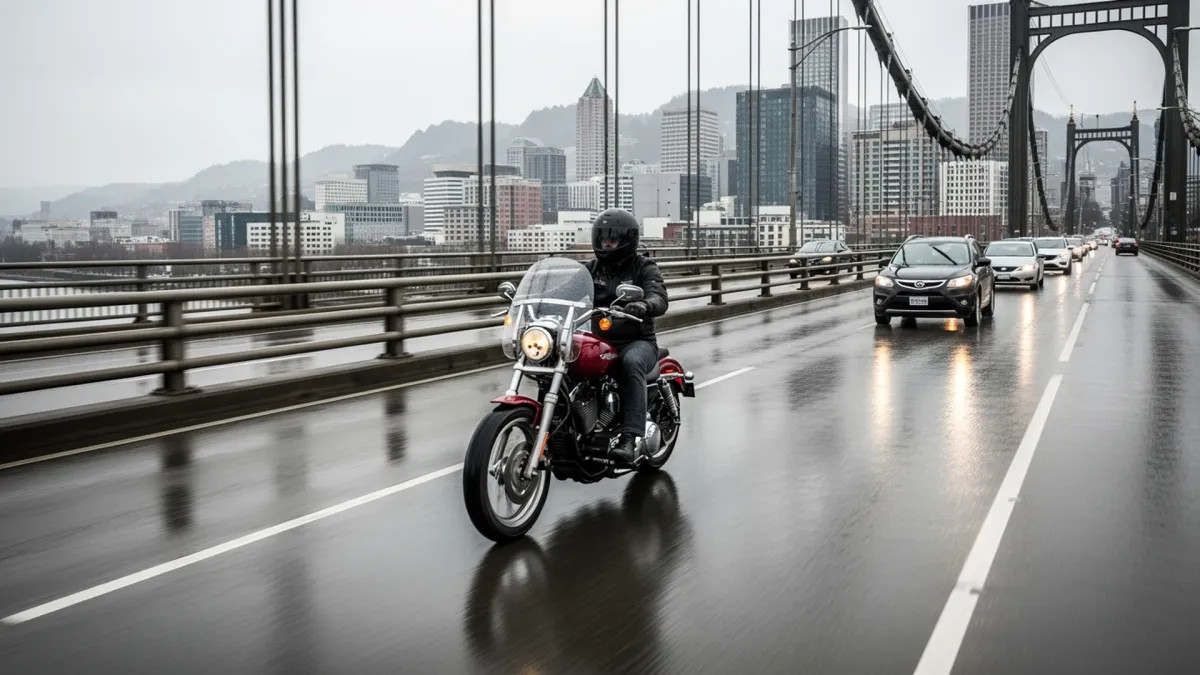
Picture a common Portland scenario. You are heading west on Powell on a wet fall afternoon, wheels tracking carefully over the painted lines and slick MAX rails that catch every rider off guard downtown. A driver rolls out of a side street without looking and clips your front end. You go down. Ambulance, emergency room, imaging, maybe surgery. Now the questions start, and this is where the gap opens up.
- ✓ Your own bike policy's PIP. Unless you specifically bought it, there usually is none, because motorcycles are exempt from Oregon's PIP requirement.
- ✓ The at-fault driver's PIP. That coverage pays their injuries, not yours. It does not extend to the rider they hit.
- ✓ Your health insurance. It may help, but it often comes with deductibles, copays, network limits, and a right to be paid back out of any settlement you eventually recover.
- ✓ Money out of your own pocket. That is exactly the hole riders fall into when nothing else lines up in time.
None of that is a reason to stop riding. It is a reason to understand what actually stands between you and a five-figure medical bill before you ever need it.
How Oregon Riders Actually Close the Gap
Because PIP is not built into the bike, smart Oregon riders build their protection somewhere else. The pieces worth reviewing with your agent, ideally before the next ride up the Historic Columbia River Highway, come down to a few coverages you control.
- ✓ Buy PIP or medical payments coverage for the bike. Even though it is not required, many carriers will let you add first-party medical coverage to a motorcycle policy. It is not automatic, so you have to ask for it.
- ✓ Carry strong health insurance and know how it works. Understand your deductible, your out-of-pocket maximum, and whether your plan can claim reimbursement from a settlement.
- ✓ Load up on Uninsured and Underinsured Motorist coverage. Oregon requires UM and UIM on your policy, and for a rider with no PIP, this is the real backstop when the person who hit you has little or no coverage.
- ✓ Document everything after a crash. Photos, the other driver's information, witnesses, and prompt medical care matter more for a rider precisely because there is no automatic PIP payout smoothing things over.
The theme across all of these is the same. Nobody is going to hand an Oregon motorcyclist the no-fault cushion that car drivers get. You build your own.
What to Do When PIP Is Not There
If you go down and you are hurt, the order of operations does not change just because PIP is missing. Get medical care first and keep going to your appointments. Document the scene and the other driver before anyone drives off. Do not give a recorded statement to the other side's insurer before you understand your position. And get your own coverage reviewed by someone who reads these policies for a living, because the difference between recovering your costs and eating them often comes down to a UM/UIM provision most riders never think about until they need it.
Dave Eltringham and the Portland motorcycle injury attorneys at ELG Injury Lawyers represent riders hurt by negligent drivers. If you have questions after a crash, their team is here to help.